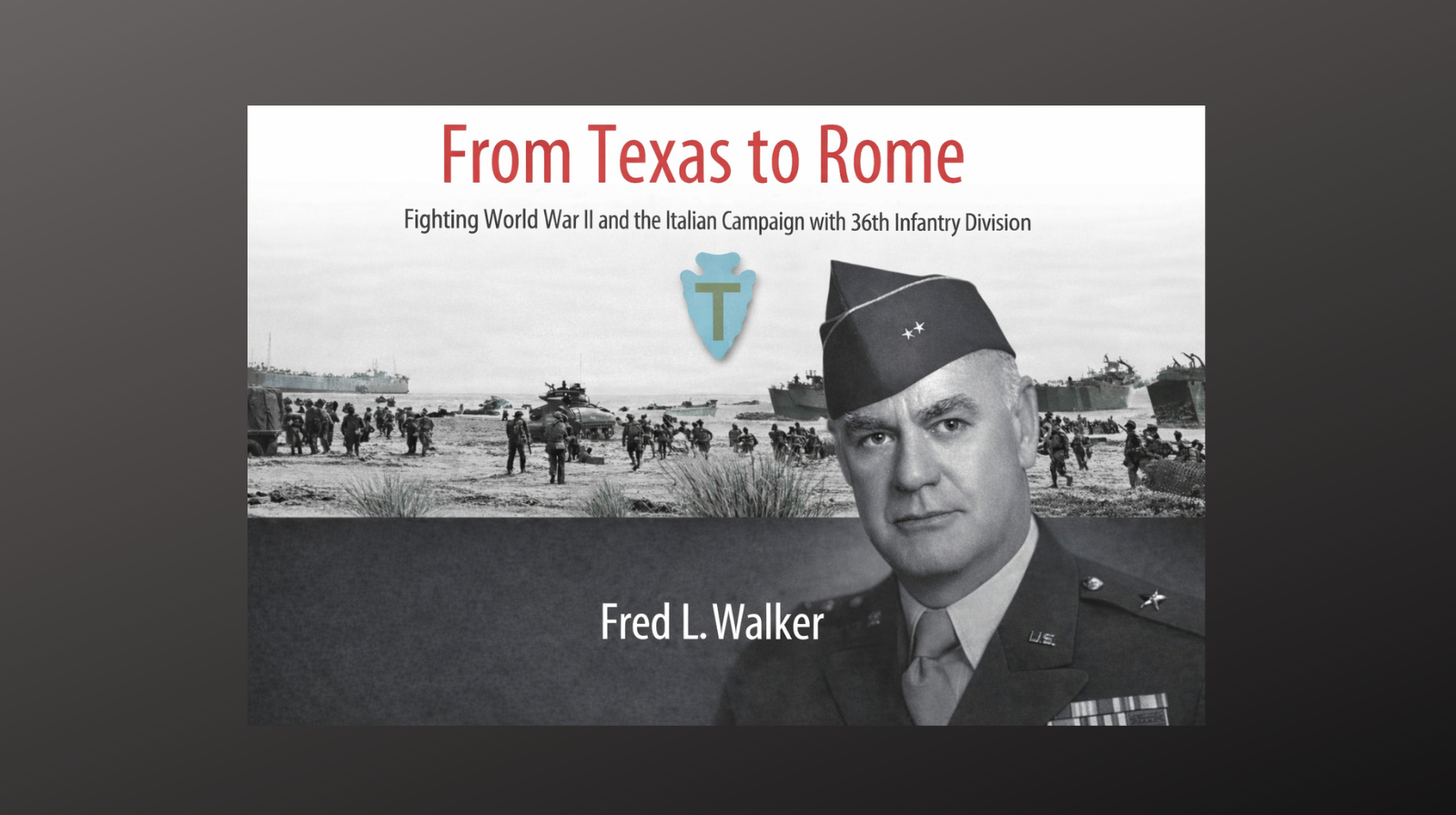
T-PATCHERS’ TRAIL IN ITALY
36th Infantry Division – “Texas T-Patchers”
(1943–1944) • From Paestum to Rome
A private WWII battlefield experience following the 36th Infantry Division across some of the most difficult and emotionally powerful landscapes of the Italian Campaign: the beaches of Paestum, the bitter mountain fighting of the Winter Line, the tragedy of the Rapido/Gari, and the final battles in the Alban Hills before Rome.
A Journey of Endurance, Sacrifice, and Resolve
The men of the 36th Infantry Division arrived in Italy as citizen-soldiers carrying the pride of Texas on their shoulder patch. What followed was a road carved through shock, courage, exhaustion, and loss — a campaign where every ridge had to be taken by hand, every river crossing demanded lives, and every “next objective” was paid for under fire.
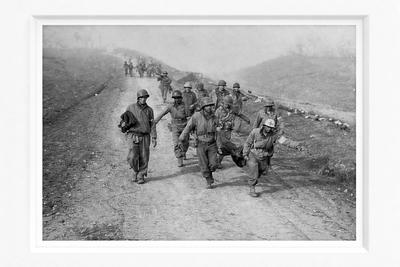
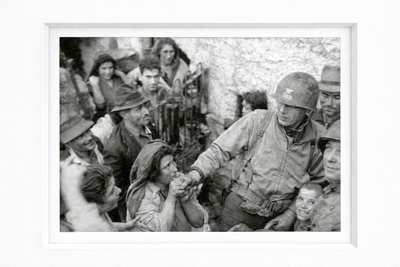
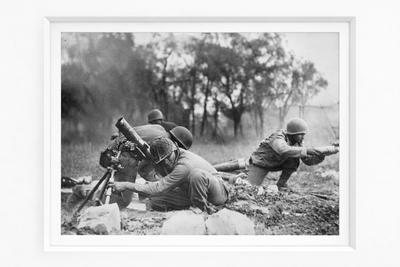
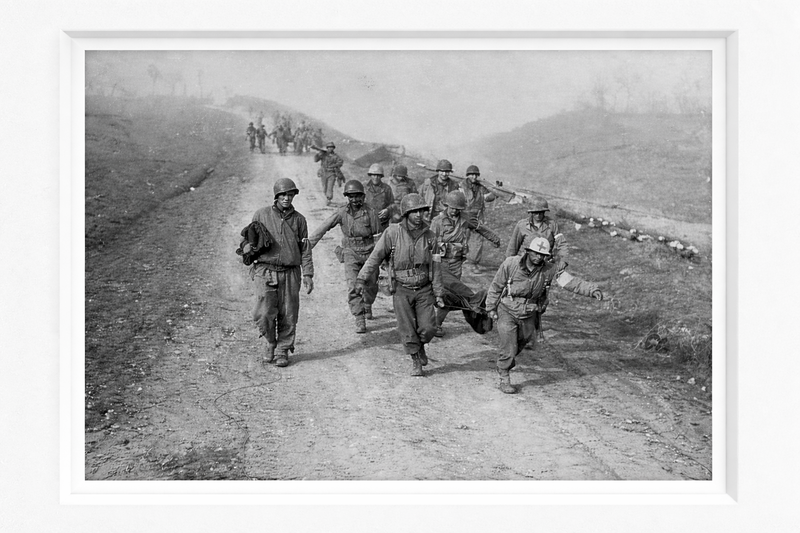
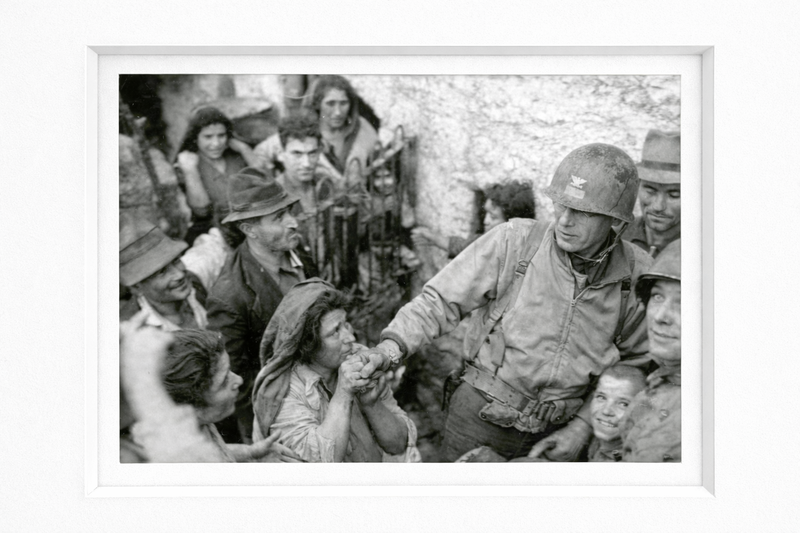
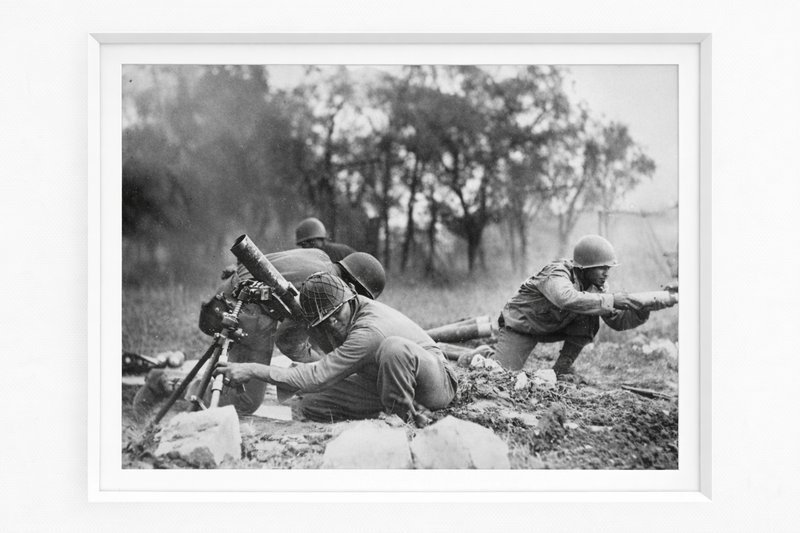
This tour is built for families, descendants, and history travelers who want more than a list of stops: it is designed to help you see the ground, understand the decisions, and feel the human dimension behind the 36th Division’s path from Paestum to Rome. On board, we use maps, archival photos, and “then & now” comparisons to reconstruct the battlefield as it was.
Paestum Landings – Operation Avalanche
9 September 1943
The 36th Division’s combat debut began at dawn along the beaches near Paestum, with the ancient Greek temples rising behind the smoke. The landing was not a “clean” operation — it was immediate contact, confusion, and relentless German counterattacks as the enemy tried to crush the beachhead before it could hold.
- Landing zones: the shoreline near Paestum’s temples and the first push inland.
- Tobacco Factory & Sele–Calore plain: fighting that became a symbol of the struggle to survive the first days.
- Counterattacks: German infantry and armor pressing hard to force the Allies back to the sea.
Altavilla & Hill 424
12–18 September 1943
Leaving the beaches, the Texans fought toward Altavilla and the dominating height of Hill 424. Here, the battlefield becomes vertical: steep slopes, exposed approaches, and positions that had to be taken under shellfire and regained again after counterattacks.
- Assault on the heights: point-by-point fighting for ground that controlled the approaches to Salerno.
- German counterattacks: withdrawals, renewed attacks, and the grinding reality of early Italy.
- A turning point: the inland flank finally stabilized — but not without a heavy price.
San Pietro Infine & the Winter Line
December 1943
By winter, combat shifted into the mountains. Around San Pietro Infine, the War in Italy became a contest against stone, cold, and fortifications. Fighting on narrow ridges, the 36th Division supported operations in a landscape where progress could be measured in yards — and every yard was defended.
- Ridges and high ground: positions above the village under constant artillery pressure.
- Monte Sammucro / Monte Lungo area: the wider Winter Line system, where weather and terrain were weapons too.
- The human cost: frost, mud, exhaustion, and the relentless rhythm of mountain warfare.
The Rapido River Crossing – Cassino Sector
20–22 January 1944
In the shadow of Cassino, the attempt to cross the river — often called the Rapido, but here effectively the Gari — became one of the most painful chapters in the 36th Division’s history. It was a night of cold water, open ground, and a defensive system designed to kill: machine guns interlocking across the flats, mortar and artillery already zeroed onto the crossing points.
For families, this is often the place where Italy stops being a distant map and becomes a name spoken at home — a telegram, an empty chair, a story that was never fully told. Standing on the modern riverbank, you can still read the battlefield in the land: the exposed approaches, the deadly fields of fire, the thin margin between “advance” and disaster.
Staff Sergeant Thomas E. McCall – Medal of Honor
During the fighting near San Angelo on 22 January 1944, Staff Sergeant Thomas E. McCall (Company F, 143rd Infantry Regiment, 36th Infantry Division) led his machine-gun section across the river under intense fire. When his men were killed or wounded, he continued forward alone, using his weapon to silence multiple enemy machine-gun positions before being captured. For this action, he received the Medal of Honor.
In this tour, we don’t treat McCall’s story as a legend — we place it on the ground: where the crossing was attempted, how the German positions dominated the flats, and why a single act of leadership under fire could mean the difference between movement and collapse. His courage is remembered not because it was “cinematic”, but because it happened in the most unforgiving circumstances — and it happened when everything was already falling apart.
- Focus on terrain: crossing points, exposure, and the tactical problem faced by the attackers.
- Then & now: maps and archival images to reconstruct what the men saw in darkness and fire.
- Family context: space to honor a relative’s story with accuracy and respect.
Anzio Beachhead
February – May 1944
After Cassino, the 36th Division moved to Anzio, reinforcing a perimeter locked between sea and artillery. Here the war changed again: trenches, patrols, sudden bombardments, and months of pressure as German forces attempted to break the beachhead.
- Trench warfare: a static front line under constant shelling.
- Attrition: endurance became as important as firepower.
- A waiting battle: survival until the breakout could begin.
Velletri, Monte Artemisio & the Final Battles Before Rome
May – June 1944
The final stretch toward Rome was not an easy march. In the Alban Hills, around Velletri and Monte Artemisio, German forces fought stubborn delaying actions to protect the approaches to the capital. The ground here dominates the road network — control the heights, and you control the path north.
This is the closing chapter many visitors don’t expect: after months of suffering, the last obstacles still demanded hard fighting. When the line finally cracked, Rome was close — and the meaning of “close” in war is always measured in lives.
- Monte Artemisio: commanding terrain tied to the final German defensive effort south of Rome.
- Velletri–Lanuvio sector: fierce engagements on the route into the Alban Hills.
- Context: how these battles fit into the breakout and the race to the capital.
The Liberation of Rome
4 June 1944
On 4 June 1944, the T-Patchers entered Rome. For many, it was a moment of relief and exhaustion rather than celebration — the end of a path that began at Paestum and passed through some of the harshest ground in the campaign.
Booking Options – Flexible Itineraries
You may book this experience in different formats to match your interests and availability. Every itinerary can be fully customised — especially for families researching a specific soldier, company, or regiment within the 36th Infantry Division.
- One-day tour (Cassino based): Winter Line, Rapido/Gari crossing sector, Gustav Line battlefield focus.
- Two-day tour (Cassino + Anzio): following the Allied advance from Cassino to the beachhead and breakout story.
- Multi-day trail (Paestum to Rome): the complete T-Patchers route across Italy.
Rome Tours You Can Add to Your Experience
- Colosseum & Roman Forum: skip-the-line entrance with an archaeologist.
- Vatican Museums & Sistine Chapel: authorised fast-track access.
- St. Peter’s Basilica: guided visit.
- Appian Way & Catacombs: a deeper Rome experience.
- Jewish Ghetto, Trastevere & Rome during WWII: occupation history and key sites.
36th Infantry Division WWII Tour
In the Footsteps of the Texas T-Patchers
This is a private battlefield tour with pick-up from your hotel in Cassino, Anzio, or from the train station. Standard duration is approximately 6 hours (longer itineraries available).
Private transportation is provided in a Mercedes van equipped with a multimedia monitor for maps, videos, and “then & now” footage. The itinerary can be fully customised according to your interests and any family connection to a veteran.
Email: danila.bracaglia@gmail.com
WhatsApp: +39 338 2458831