351st Infantry Regiment at Santa Maria Infante
Why the Regiment Matters
In the Italian Campaign, many American soldiers did not define their wartime identity primarily by division, but by their regiment. It was the regiment that trained together, advanced together, suffered losses together, and remained etched in memory long after the war ended.
This was especially true for the men of the 85th and 88th Infantry Divisions, the first American draftee divisions to arrive in Italy. Although these divisions operated side by side in the western sector of the front, their combat histories were shaped at regimental level — each regiment fighting its own battle, on its own ground, at tremendous cost.
The 351st Infantry Regiment, part of the 88th Infantry Division, is one of those units whose story stands on its own. Diaries, after-action reports, family histories, and dedicated research projects often speak not of the division as a whole, but of the regiment itself — because for the men who fought here, the regiment was the war.
This page focuses on the 351st Infantry Regiment during one of its defining engagements: the brutal battle for Santa Maria Infante and the breaking of the western sector of the Gustav Line.
Breaking the Gustav Line
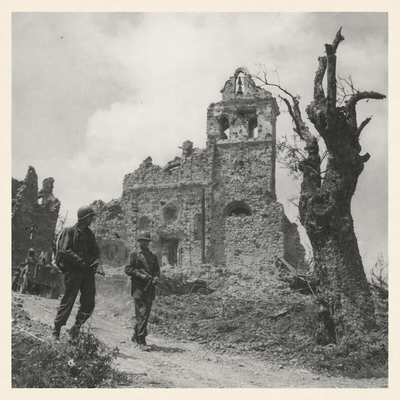
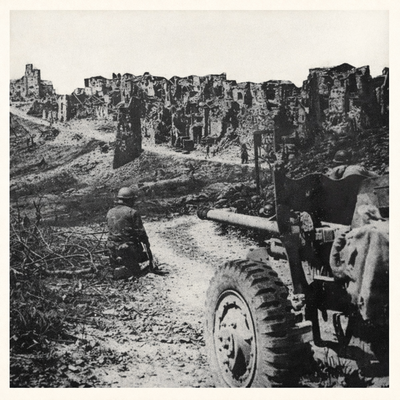
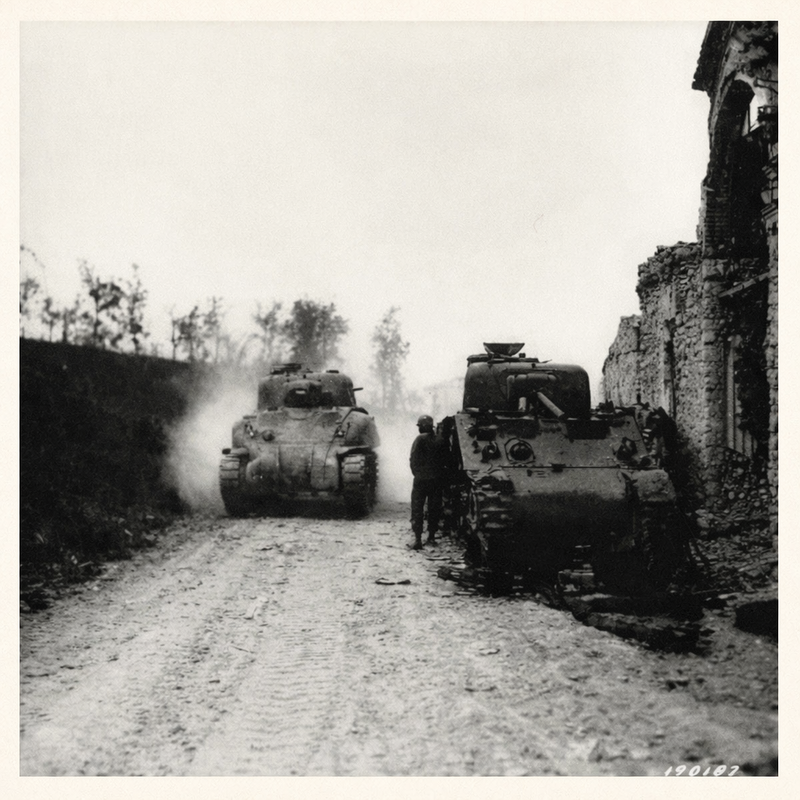
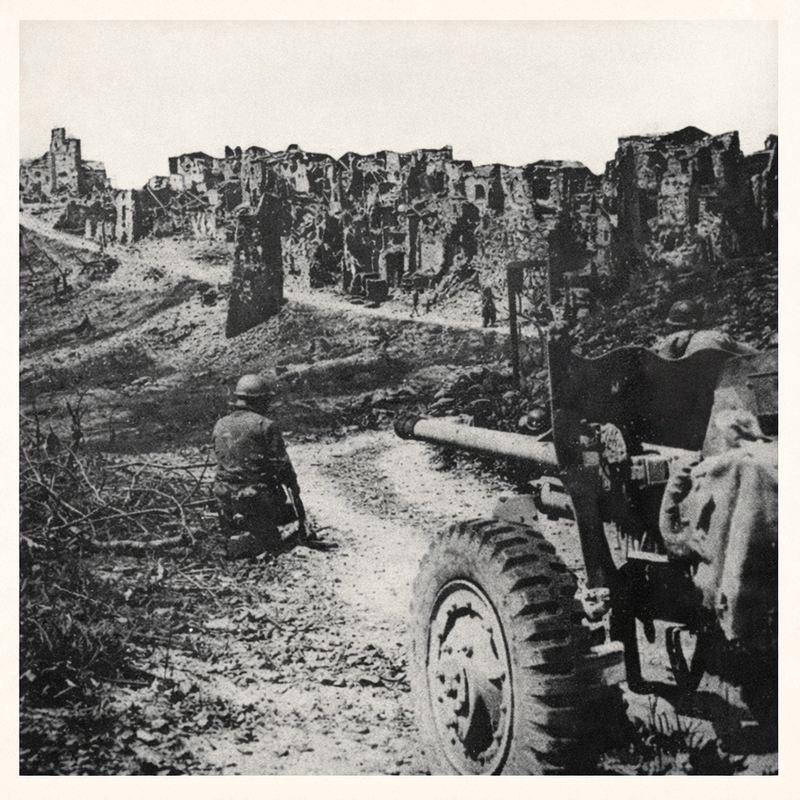
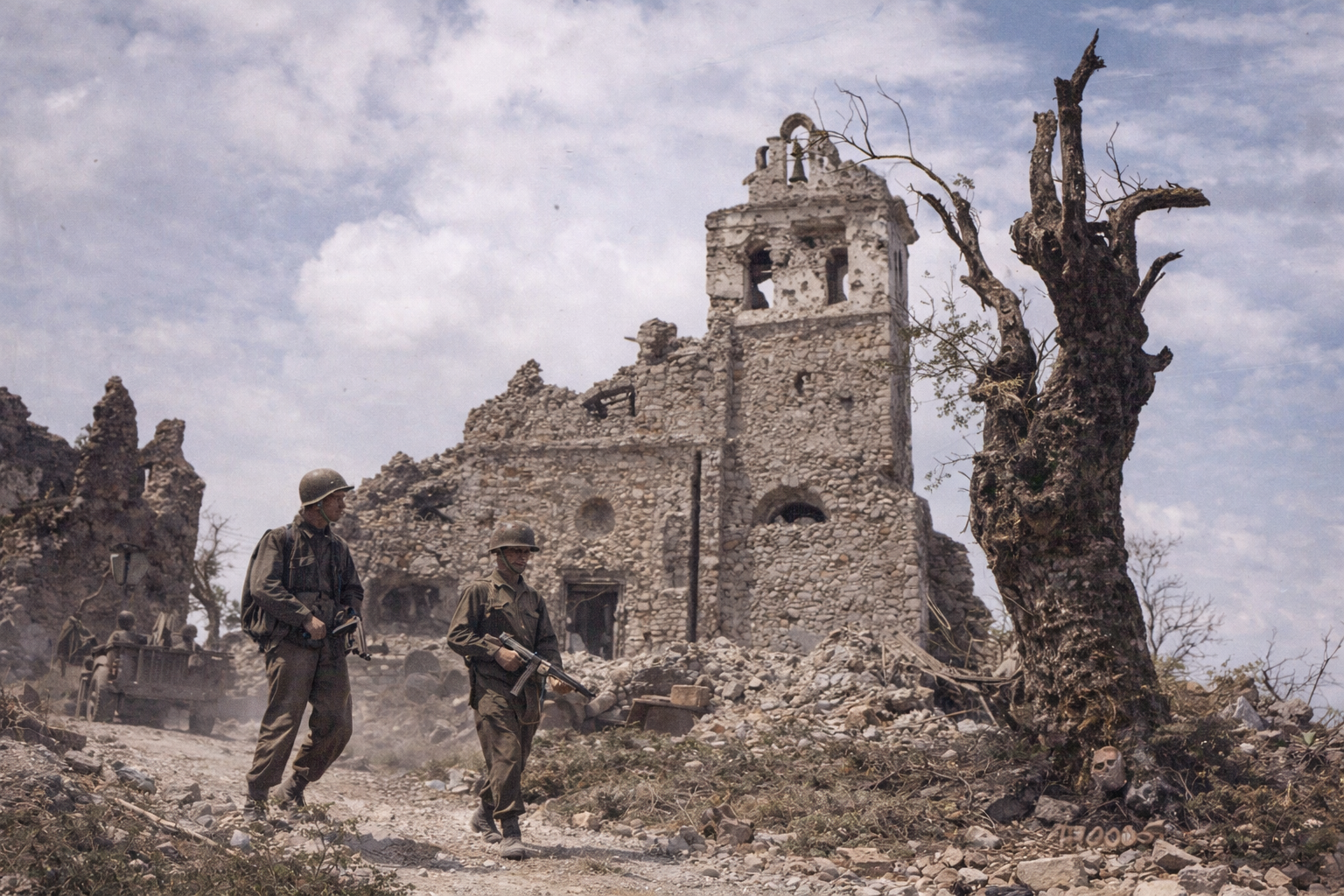
The Battle of Santa Maria Infante was one of the most brutal and decisive engagements of the Italian Campaign. Fought between May 11 and May 14, 1944, along the western sector of the Gustav Line, it was here that the German defensive system anchoring southern Italy finally began to collapse.
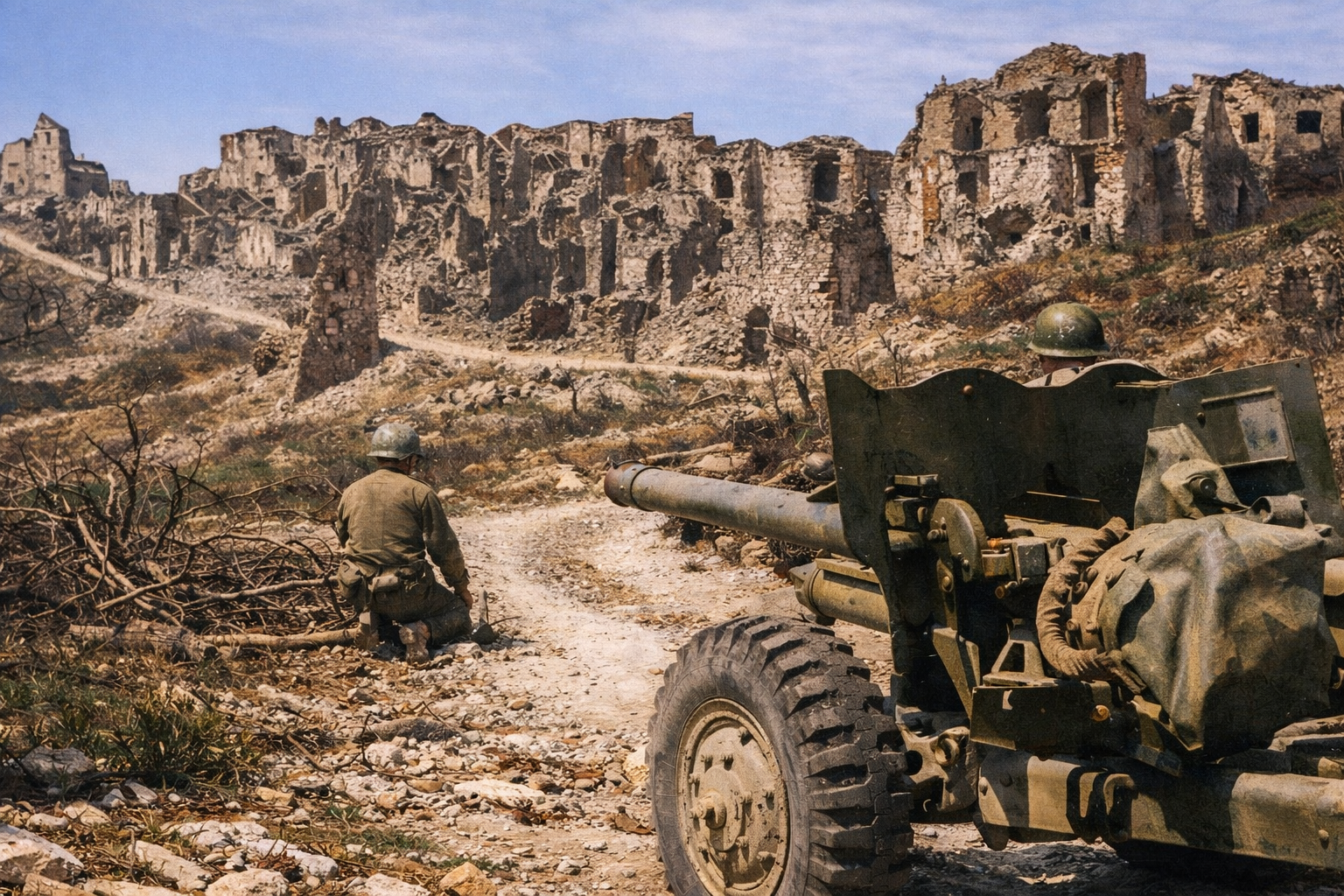
The terrain alone explains why. A maze of steep spurs, narrow draws, and razor-backed ridges rising from the Garigliano valley formed a natural fortress guarding the approaches to Rome. As long as Santa Maria Infante remained in German hands, the western hinge of the Gustav Line could not be broken.
351st Infantry Regiment – Advance
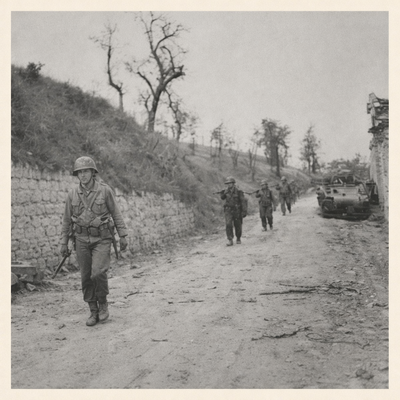
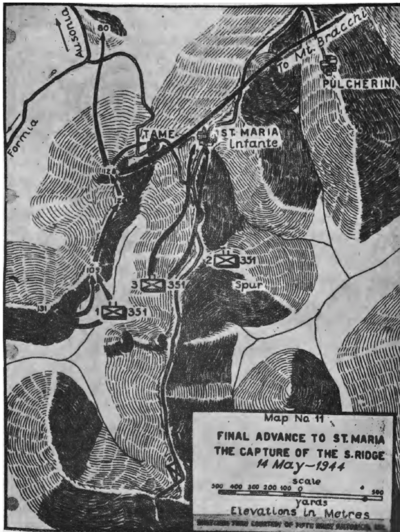
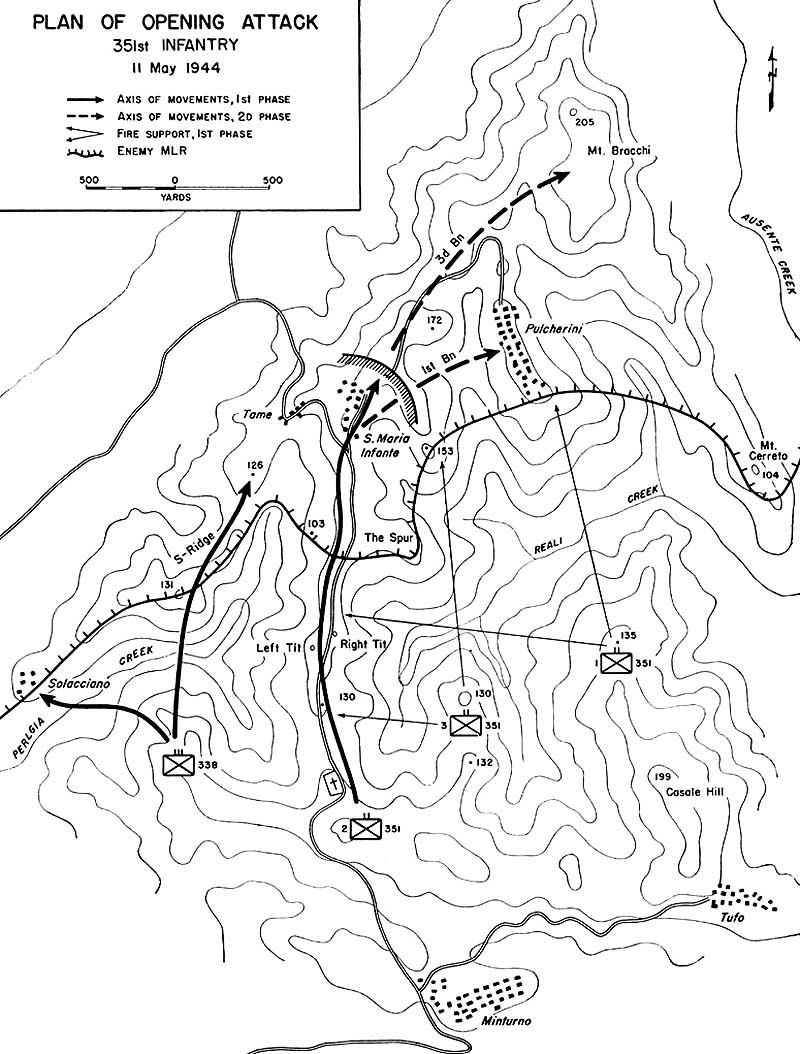
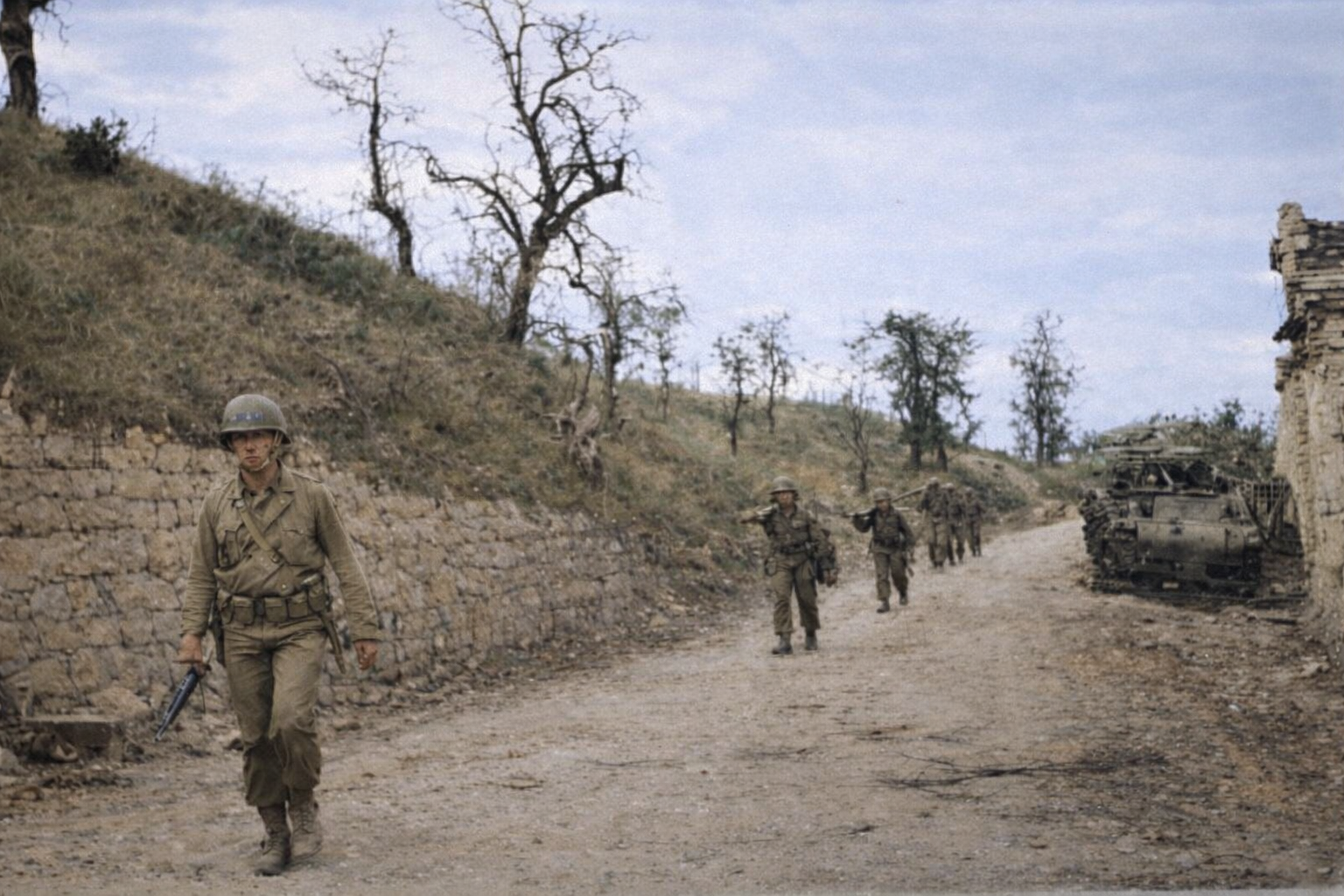
In the opening hours of the assault, the men of the 351st Infantry Regiment, 88th Infantry Division, moved forward from assembly areas near Minturno. Crossing ground already registered by German artillery, the regiment advanced uphill from the vicinity of the Minturno cemetery toward a complex system of spurs and ridges dominating the valley.
The advance unfolded along designated right and left axes of attack. Units on the right flank climbed toward exposed spurs commanding the approaches below, while elements on the left pushed through a series of draws leading toward Hill 103 and the S-Ridge.
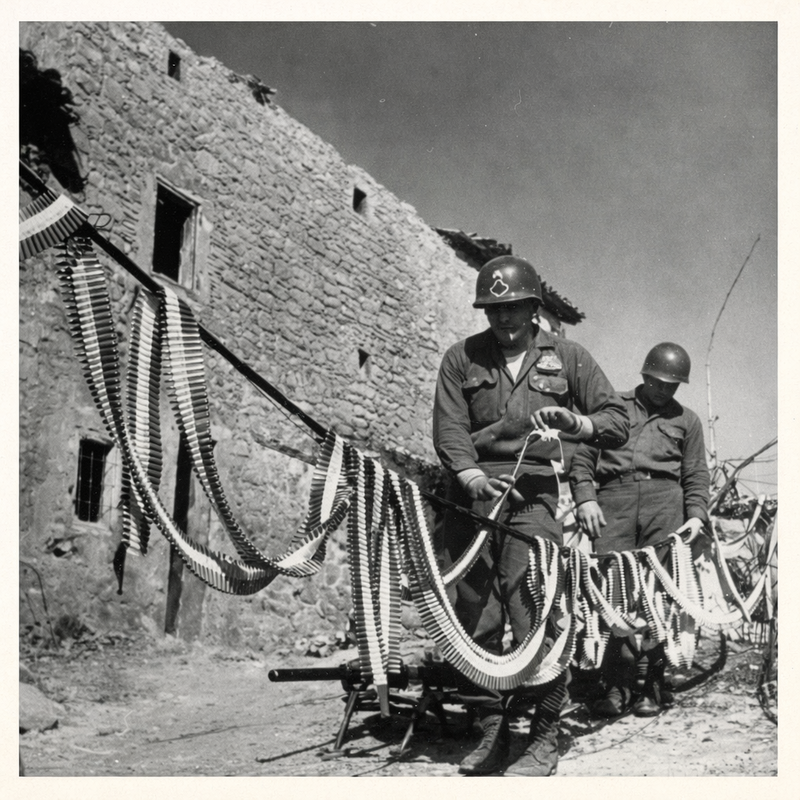
German machine-gun and mortar fire swept the slopes, turning every movement into a calculated risk. Platoons frequently lost contact as the terrain folded and twisted, forcing junior officers and NCOs to fight small, isolated actions in terrain that favored the defender at every turn.
Company F – Annihilated
Few episodes capture the ferocity of the battle more starkly than the fate of Company F, 351st Infantry Regiment. Committed to the assault against heavily defended ridge positions, Company F advanced into a killing zone dominated by interlocking German machine-gun fire.
As the company attempted to gain ground along an exposed spur, it was caught in devastating crossfire from positions dug into rock and caves above. Officers and non-commissioned officers were hit early, communications broke down, and small groups fought on independently under continuous fire.
When elements of Company K eventually moved forward to relieve the position, they found only two survivors of Company F still holding on among the rocks. Company F had ceased to exist as a fighting unit.
Company I and Company L on the Ridges
While Company F was being shattered on the forward slopes, Company I and Company L were locked in equally savage fighting along adjacent ridges and draws.
Progress was measured in yards. Repeated attempts to move forward were met by mortar concentrations and small-arms fire from concealed positions. Casualties mounted steadily as squads struggled to maintain cohesion.
Despite losses, Companies I and L succeeded in holding critical ground, preventing German counterattacks from rolling up the regiment’s line.
German Defenders
Defending Santa Maria Infante were elements of the 29th Panzergrenadier Division, including units of the 26th Grenadier Regiment.
Positions were carved into rock, hidden in caves, and arranged to create overlapping fields of fire. Mortars and artillery were pre-registered on likely avenues of approach.
Casualties and the Fall of Santa Maria Infante
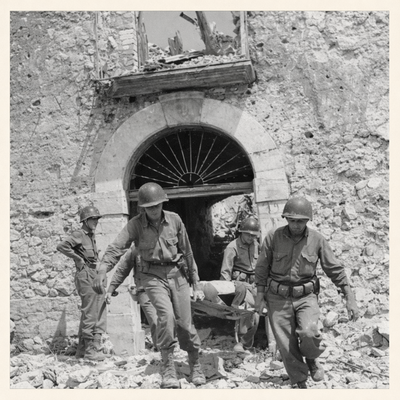
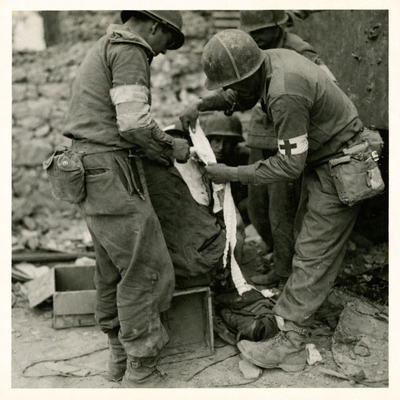
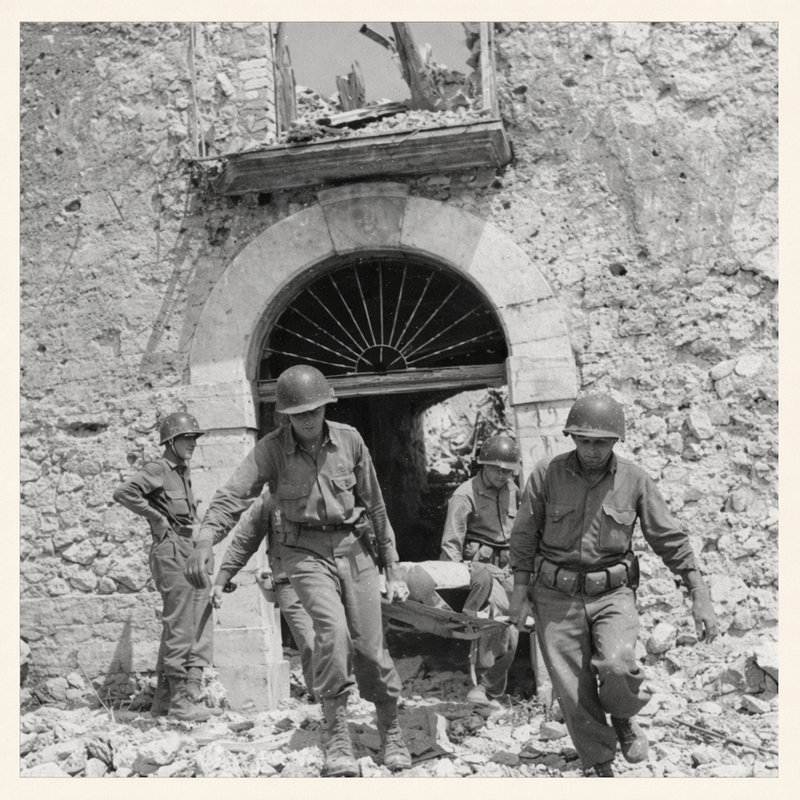
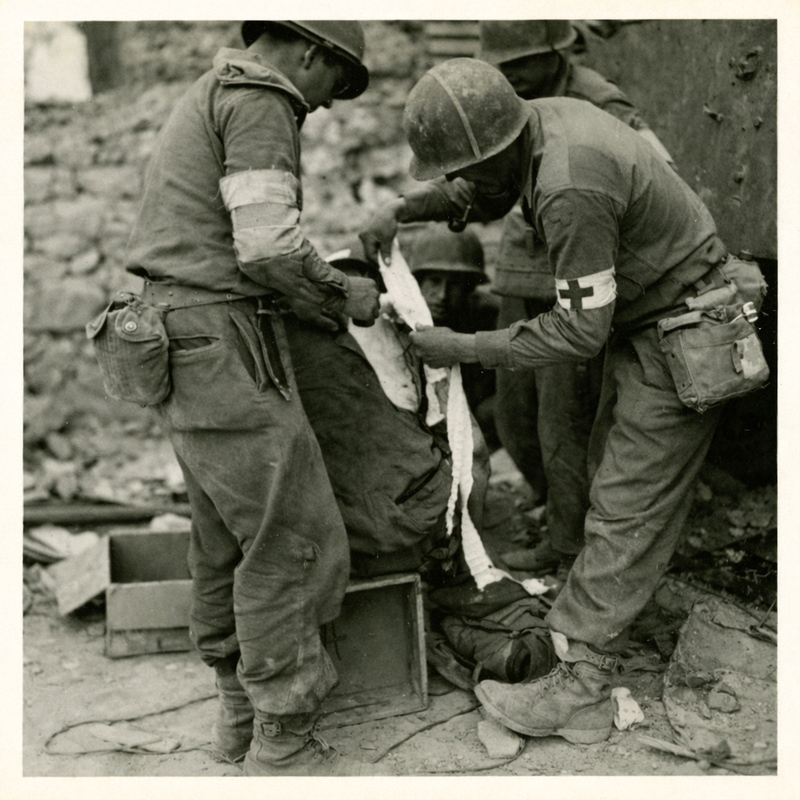
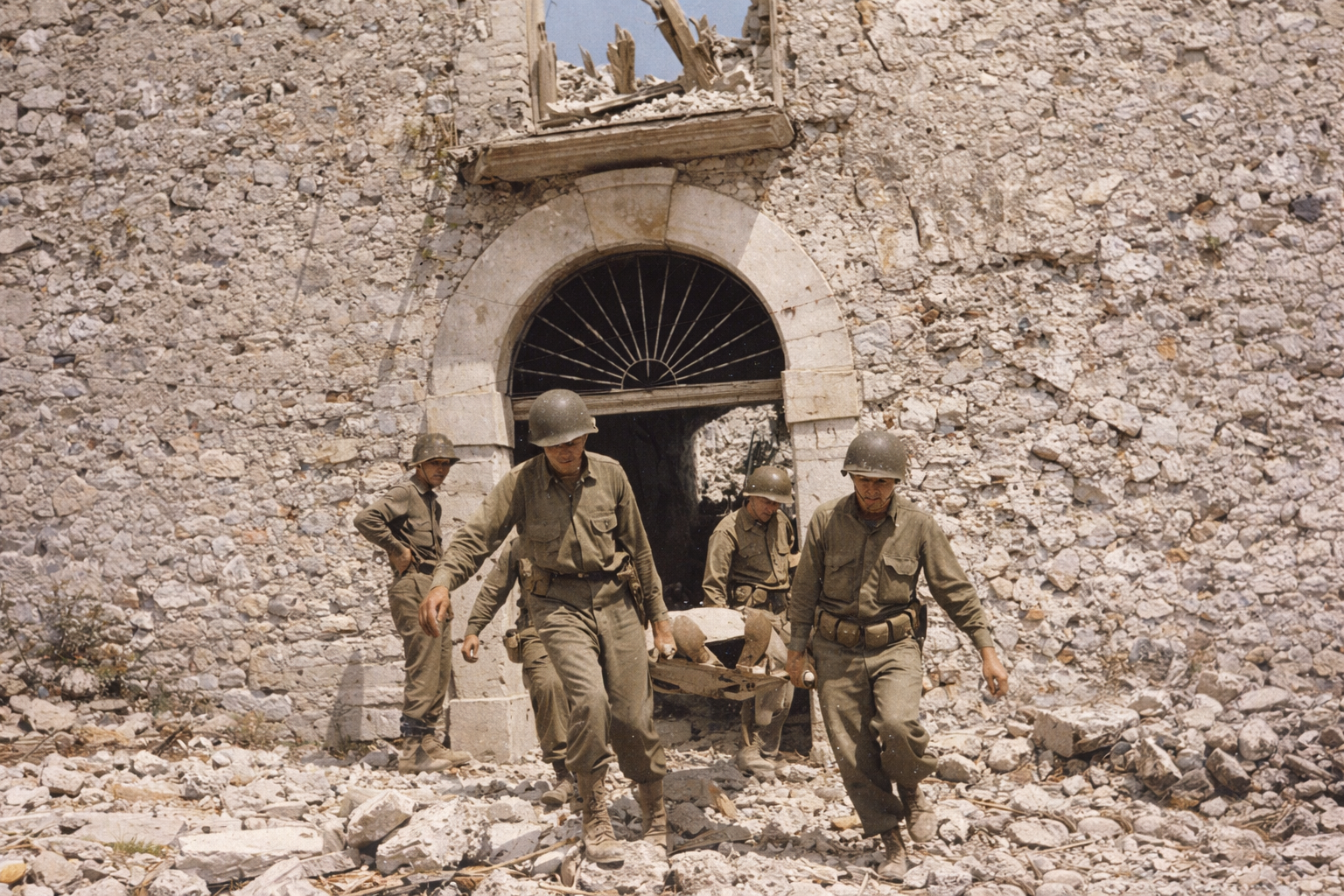
Between May 11 and May 14, 1944, casualties on both sides were severe. The 88th Infantry Division suffered several hundred casualties during the fighting, with the 351st Infantry Regiment bearing a heavy share of the losses.
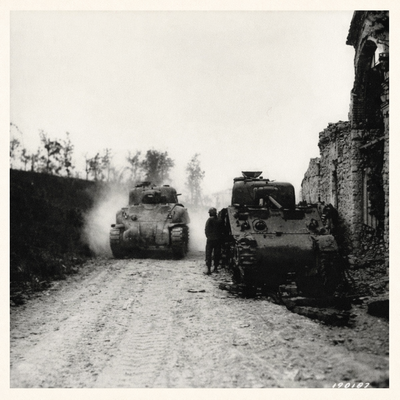
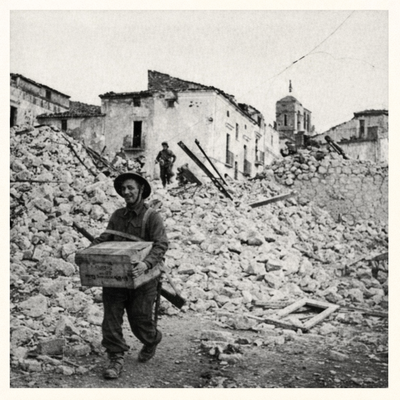
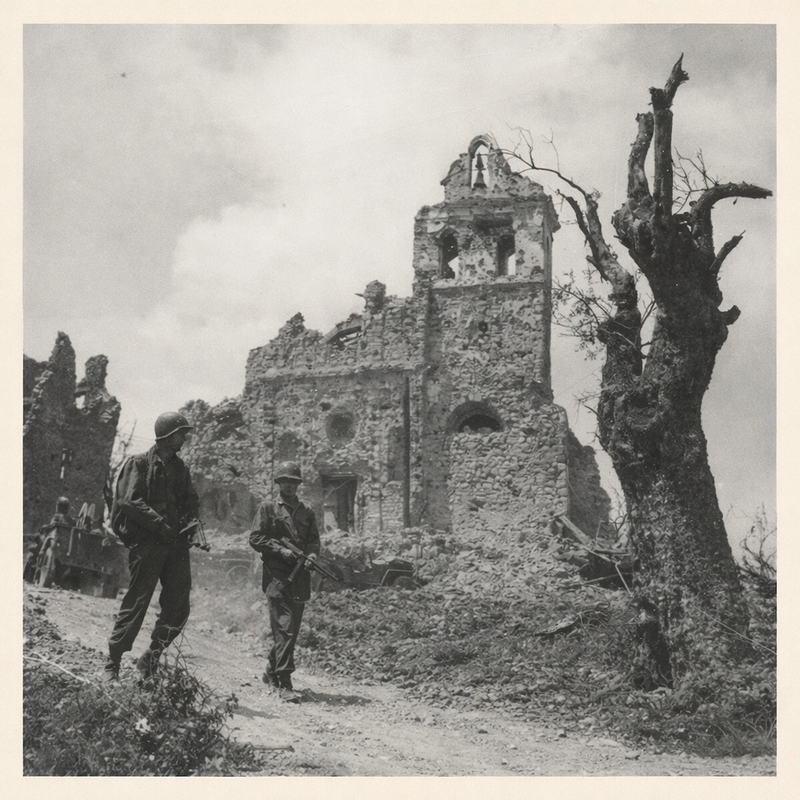
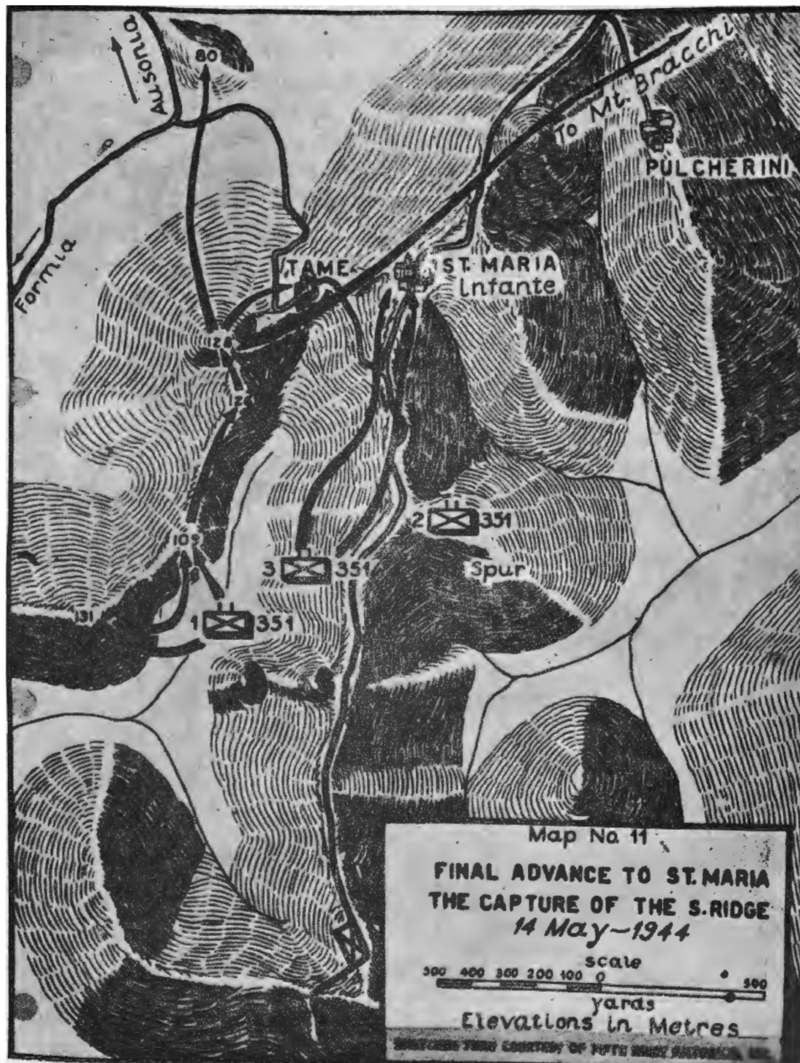
On May 14, 1944, American forces secured Santa Maria Infante, breaking the western hinge of the Gustav Line and opening the road north.
Exploring the Battlefield Today
This battlefield is explored in depth during the private 88th Infantry Division WWII Tour, with a strong focus on regimental actions and terrain-based interpretation.